



Match the litter's waste-removal method to a busy household, while keeping a comfortable option for every cat.
Start with How You Want to Remove Urine
For adult cats that already accept a fine texture, an unscented clumping litter is a practical first candidate for a busy household: you can remove urine clumps and solid waste while leaving the rest of the litter in place. VCA's housetraining guidance notes that many cats prefer fine clay, clumping-style litter.
Absorbent non-clumping pellets or crystals offer a different routine. Liquid stays in the absorbent material until you remove that material or replace the contents. Choose this route when your cats already accept it and you prefer its handling method, rather than expecting it to work like clumping litter.
The best cat litter for multiple cats fits both the cats and the cleaning workload. A “multi-cat” label is less useful than knowing which part of your current routine needs to change.
Compare Litter Types for Frequent Use
| Type | Waste-removal method | Best starting situation | Trade-off to plan for |
|---|---|---|---|
| Unscented clumping clay | Lift urine clumps and scoop solid waste | Cats already like a fine texture and you want a familiar daily scooping routine | Carrying and disposing of standard-weight litter can be a substantial part of the job; dust varies by formula |
| Plant-based clumping granules, such as corn | Remove urine clumps and solid waste | You want clumping with a different base material and the cats accept the granules | The material name alone does not establish clump strength, dust level or compatibility |
| Clumping tofu-style pellets | Remove formed clumps; pellet shape differs from sand-like grains | You want a pellet format while retaining scoopable urine removal | Cats accustomed to sand may need another option; pellet size can exclude some automatic boxes |
| Non-clumping paper or pine pellets | Remove wet paper pellets, or manage pine sawdust, alongside solid waste | The cats already use pellets and you are willing to maintain that specific absorbent system | No firm urine clump to lift; the wet-material routine becomes central as use increases |
| Non-clumping silica-gel crystals | Remove solid waste, stir as directed and replace saturated litter | Cats accept crystals and the system is designed for them | Urine remains in the absorbent bed; household use and humidity affect replacement needs |
World's Best identifies its Multiple Cat Unscented formula as corn-based and clumping. Tuft & Paw's tofu litter is a pellet-format clumping example. Use these examples to distinguish the two formats and their removal routines.
Use the clumping vs. non-clumping litter guide for a closer look at the two removal methods.
Choose the Next Candidate by Your Biggest Bottleneck
The boxes need attention repeatedly through the day. Start with an unscented clumping formula if all cats accept it. Removing urine as a discrete clump makes the daily task clear. Switching to absorbent pellets simply to avoid scooping changes the task to wet-material management; it does not remove that task.
Carrying litter upstairs is the difficult part. Compare a lightweight clumping formula or plant-based clumping option before moving to a completely different cleaning mechanism. Weigh the amount needed to fill your own box to its specified level, rather than comparing bags only by their printed weight. Keep the familiar texture if that is what the cats reliably use.
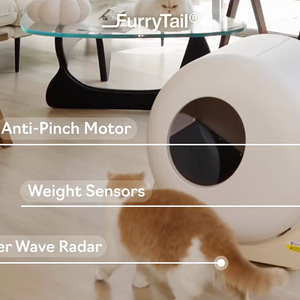
An automatic box is part of the plan. Start with the model's permitted litter types, then narrow by your cats' preferences. A clump-separating unit and a crystal-rake system can require different materials. The automatic box litter compatibility guide explains that decision before a new bag goes into the unit.
Offer the candidate in a separate trial box while keeping familiar options clean and available. A litter that is convenient for you but rejected by one cat is not a household-wide solution.
Choose Odor Removal Before Added Fragrance
First choose a waste-removal method you can maintain: remove clumps from clumping litter, or remove and renew absorbent material according to its directions. Neither method benefits from leaving waste longer because the bag promises strong odor control.
Next, consider an unscented finished formula with an odor-absorbing ingredient if odor is still the selection issue. For example, Purina describes activated charcoal in Tidy Cats Free & Clean as trapping odor molecules. That is different from adding perfume to mask a smell. Choose the complete product rather than pouring loose charcoal or another powder into the box.
A scented formula is not the default upgrade for a multi-cat home. Strong scents can put cats off the litter tray, as Cats Protection explains. Keep acceptance ahead of the scent you notice when opening the bag.
Compare the Cost of Litter Used, Not Just the Bag Price
For the same cats over the same period, calculate litter cost used = bag price × fraction of the bag consumed. Include the initial fill for each candidate and all top-ups within that period. Compare equivalent setups and the same cleaning standard.
| Illustrative 30-day comparison | Bag price | Fraction consumed | Litter cost used |
|---|---|---|---|
| Formula A | $30 | 0.8 bag | $24 |
| Formula B | $40 | 0.5 bag | $20 |
These are hypothetical numbers to show the calculation. The higher-priced bag costs less in this example because less is consumed; your household may get a different result. Also consider time spent removing wet material, carrying supplies and cleaning the floor. Buy a small trial supply first and compare larger packs only after acceptance and the routine are established.
Keep a Working Option for Every Cat
Q: Does every box need the same litter? No. If one cat prefers a different texture, retain a suitable option rather than replacing every box at once. Keep useful boxes available in separate locations; a new formula is not a reason to reduce access. Use the litter box numbers and placement guide to plan the space.
Q: Will crystal litter last the same number of days with more cats? Do not extend a single-cat claim to a busier household. PetSafe's crystal-system care guidance explains that moisture, room conditions and uneven saturation affect tray life. Use the system's directions and replace the litter when needed rather than waiting for a promised date.
Keep the litter box cleaning routine alongside your formula choice for washing, resetting and maintaining the surrounding area.


